PDF Download the Ink & Mayhem Universe Guide 24.0 MB
Printable cards Skill Cards 26
A toon’s skills are the moves they have practiced so many times they no longer think about them. The duck who has been thrown out of a thousand saloons has learned how to land. The cat who has set a thousand mousetraps has learned how not to set them on himself. The straight man who has endured a thousand scenes has learned to keep a steady face through anything. Skills in Ink & Mayhem are the fingerprint of a long career.
The Skill List
Ink & Mayhem uses the standard Exodus NDS skill framework: each skill is rated 0 to 5, linked by default to one of the six characteristics, and resolved using the higher-of-two pool-building rule from the Core Rules. The list below covers twenty-six skills organized into six categories. Most are the Core skill list, with a few toon-flavored renames; the final four are cartoon skills added or split out for this setting.
Combat Skills
| Skill | Characteristic | Covers |
|---|---|---|
| Brawl | Might | Unarmed fighting, slapstick combat, pies to the face |
| Melee | Might | Frying pans, mallets, props wielded as weapons |
| Ranged | Agility | Thrown anvils, cartoon firearms, slingshots, dynamite |
Physical Skills
| Skill | Characteristic | Covers |
|---|---|---|
| Athletics | Might | Running, climbing, lifting, raw exertion |
| Coordination | Agility | Balance, tumbling, acrobatics, dodging |
| Readiness | Willpower | Alertness, nerve, preparedness, resisting surprise |
| Survival | Savvy | Tracking, wilderness sense, animal handling, staying alive off-lot |
| Subterfuge | Agility | Lockpicking, sleight of hand, planted props, covert manipulation |
| Stealth | Agility | Tiptoeing, hiding behind lampposts, the silent approach |
| Resilience | Willpower | Enduring pain, staying on your feet, the will not to faint |
Mental Skills
| Skill | Characteristic | Covers |
|---|---|---|
| Craft | Intellect | Building gadgets, props, traps, disguises, explosives |
| Lore | Intellect | Studio history, comedy theory, who worked with whom, when |
| Medicine | Intellect | Cartoon first aid, smelling salts, fake diagnoses, recovery gags |
| Perception | Savvy | Noticing what is there, and what should be |
| Science | Intellect | Toon science, impossible engineering theory, laboratory logic |
| Streetwise | Savvy | Studio-lot gossip, backdoor deals, the rumor economy |
Social Skills
| Skill | Characteristic | Covers |
|---|---|---|
| Charm | Charisma | Winning friends, courting audiences, the warm approach |
| Deception | Charisma | Lying, disguises, misdirection, the cold approach |
| Intimidation | Willpower | Threats, pressure, menace, dominance, cold authority |
| Leadership | Willpower | Directing an ensemble, commanding, bossing the set |
| Negotiation | Charisma | Contracts, renewals, residuals, studio lawyers |
Vehicle Skills
| Skill | Characteristic | Covers |
|---|---|---|
| Drive | Agility | All cartoon vehicles: jalopies, rockets, anvil-sleds, rolling bombs |
Cartoon Skills
These four skills are specific to Ink & Mayhem. Gag-Craft, Pratfall, and Fourth-Wall exist because the universe runs on cartoon physics (Chapter Two). Performance splits out the on-camera work that some Core settings fold into Charm, because in this setting the spotlight is mechanically important. For advancement, all four Cartoon Skills count as profession skills for every Ink & Mayhem toon.
| Skill | Characteristic | Covers |
|---|---|---|
| Gag-Craft | Intellect | Designing bits, setups, payoffs, the architecture of a scene |
| Pratfall | Agility | Controlled falls, landing marks, taking the hit with grace |
| Fourth-Wall | Willpower | Audience awareness, addressing the camera, screen navigation |
| Performance | Charisma | Singing, dancing, acting, the on-camera craft |
Skill Descriptions
The entries below cover setting-specific quirks and rulings; anything not noted here follows the Core Rules baseline.
Brawl
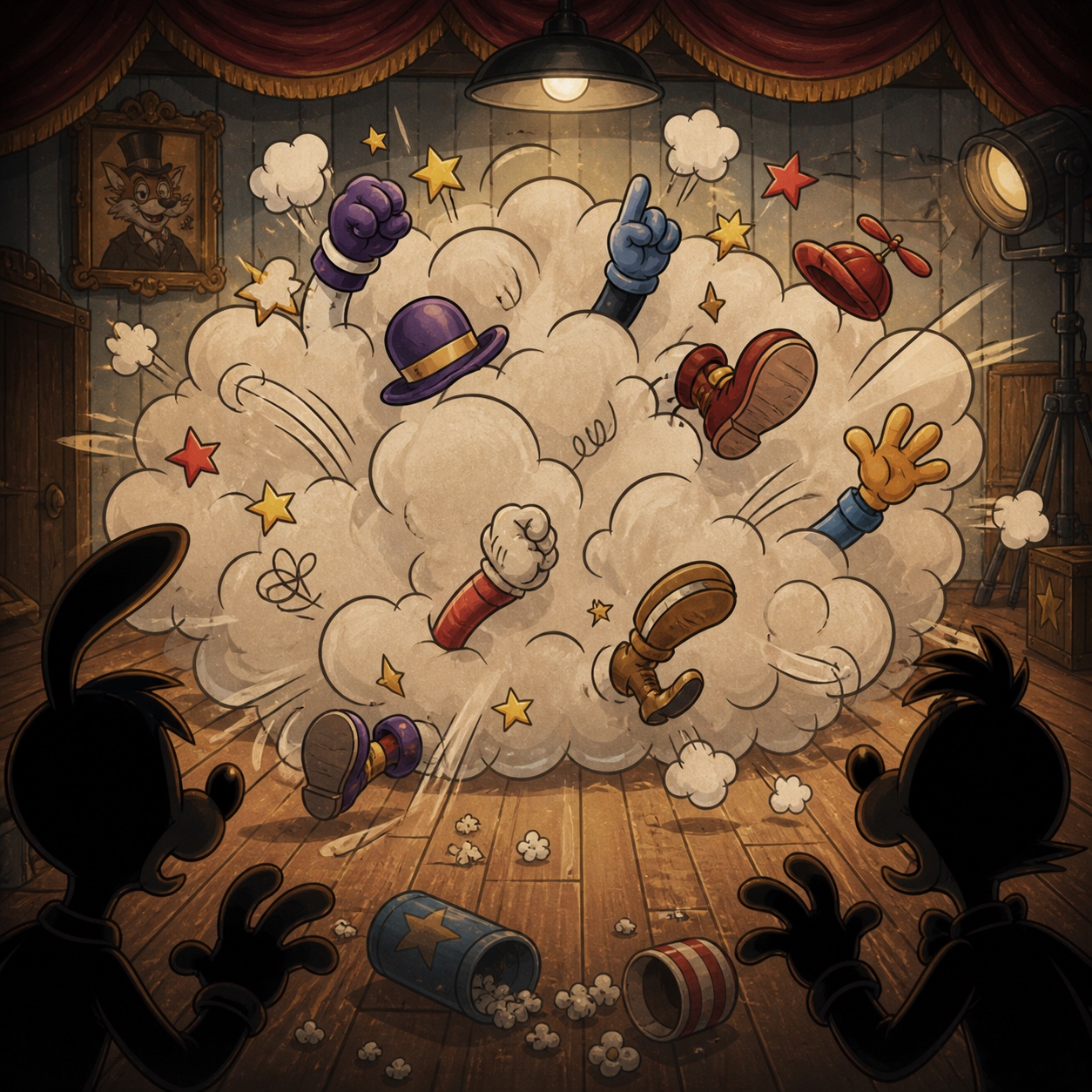
Brawl damage is almost always non-lethal and recovers at the end of the scene (see Chapter Eight, Elasticity). Bruisers and Loose Cannons rely on it more than any other combat skill.
Melee
The distinction from Brawl is the object. A fist is Brawl; a fist holding a frying pan is Melee.
Ranged
Short-range thrown weapons use Agility by default; heavier or distance thrown items may use Might at GM discretion.
Athletics
Cartoon chases almost always use Athletics for both pursuer and quarry. When a task could go either way, use Athletics for raw effort and Coordination for finesse.
Coordination
The difference between falling and falling stylishly is a Coordination check; a fall taken deliberately belongs to Pratfall instead (see Cartoon Skills, In Depth).
Stealth
Cartoon stealth has its own visual grammar: silent footsteps exaggerated to comical height, hiding behind a lamppost while entirely visible, whistling innocently. The GM is encouraged to ask for a Stealth check any time a character moves silently in a scene, even if the check is trivial.
Readiness
Readiness resists surprise, fear, intimidation, despair, and sudden mental pressure: anything that tests whether the toon keeps their nerve before the gag lands. Where Perception notices the threat, Readiness keeps the toon steady against it.
Survival
Survival is the skill for knowing when the painted desert is about to become a real desert for exactly one scene.
Subterfuge
Escaping bonds and disabling simple traps fall under Subterfuge. It handles the physical side of trickery; lying and false faces belong to Deception.
Resilience
Resilience covers ignoring Strain and resisting effects that target the body indirectly. Toons cannot truly die (Chapter Two), so it mostly determines how many rounds of abuse you can absorb before Wiped Out.
Craft
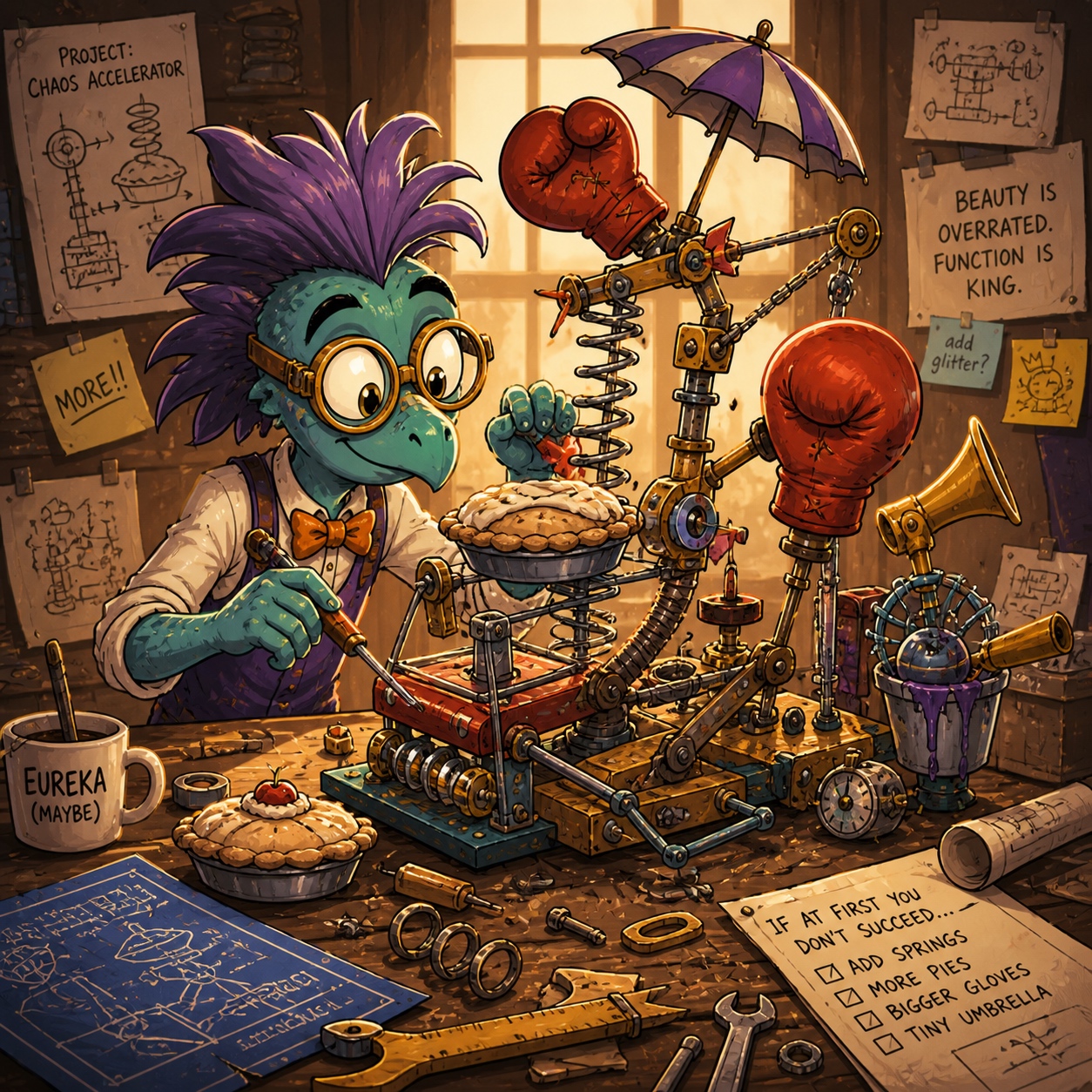
The Prop Department catalog in Chapter Six is effectively a list of things Craft produces.
Lore
Any historical or reference question about cartoon-industry matters defaults to Lore.
Medicine
Medicine keeps a toon functional after a bad scene; the care itself is always the joke version, bandages wrapped around everything except the injury.
Science
Craft builds the gadget; Science explains why it should work, even when it absolutely should not.
Perception
Perception often serves as a saving throw against Cartoon Physics: a high Perception check may let you realize you have run off the cliff before gravity remembers.
Streetwise
The line against Lore is recency: Lore is what is recorded, Streetwise is what is current on the lots this week.
Charm
When the approach turns to lying, use Deception; when it turns transactional, use Negotiation.
Deception
Fourth-wall aware characters may use Deception against the narration itself (see Chapter Eight); most groups rule this requires Fourth-Wall support.
Intimidation
Intimidation is linked to Willpower by default: the frightening toon is usually the one who refuses to blink first.
Leadership
Leadership is Willpower-linked rather than Charisma-linked because leading an ensemble of unruly toons takes stubbornness more than charm.
Negotiation
Bribery falls under Negotiation. It is the skill of choice when the scene is set in the executive tower rather than on the soundstage.
Drive
One skill covers every vehicle in the setting, up to and including the back of a giant mechanical ostrich. See Chapter Seven for vehicle statistics and chase rules.
Cartoon Skills, In Depth
Gag-Craft
Gag-Craft is the skill of designing and executing a bit. A character with high Gag-Craft can:
- Plan a multi-step trap or comedic sequence and resolve it with a single check (rather than step-by-step), at the GM’s option.
- Identify the rhythm of an unfolding scene: knowing when the bit is landing, when it is overstaying, and when the next beat is due.
- Read an opposing character’s bit in progress and predict its payoff on a successful Hard Intellect check using Gag-Craft, granting a Boon die to the next PC who interferes.
Brains and Self-Sabotaging Geniuses nearly always invest here; Bruisers rarely do.
Pratfall
Pratfall is the skill of falling correctly: landing on the precise spot the script called for, taking the hit with visible grace, and getting back up in position for the next beat. Mechanically, when a character would take damage from falls, impacts, crashes, or slapstick effects, they may make a Pratfall check against the difficulty of the hazard. On success, reduce the incoming damage by 1, plus 1 additional point of reduction per Boon spent, to a minimum of 0. On Breakthrough, the character may spend the Breakthrough to take no damage at all and land in a position of their choosing within the scene. If a hazard gives a separate avoidance check, resolve that check first; Pratfall only applies if the toon is hit or caught by the hazard.
Pratfall is the only skill in the book that explicitly interacts with the Elasticity system, and the natural home for Chaos Magnets and Lovable Dopes.
Fourth-Wall
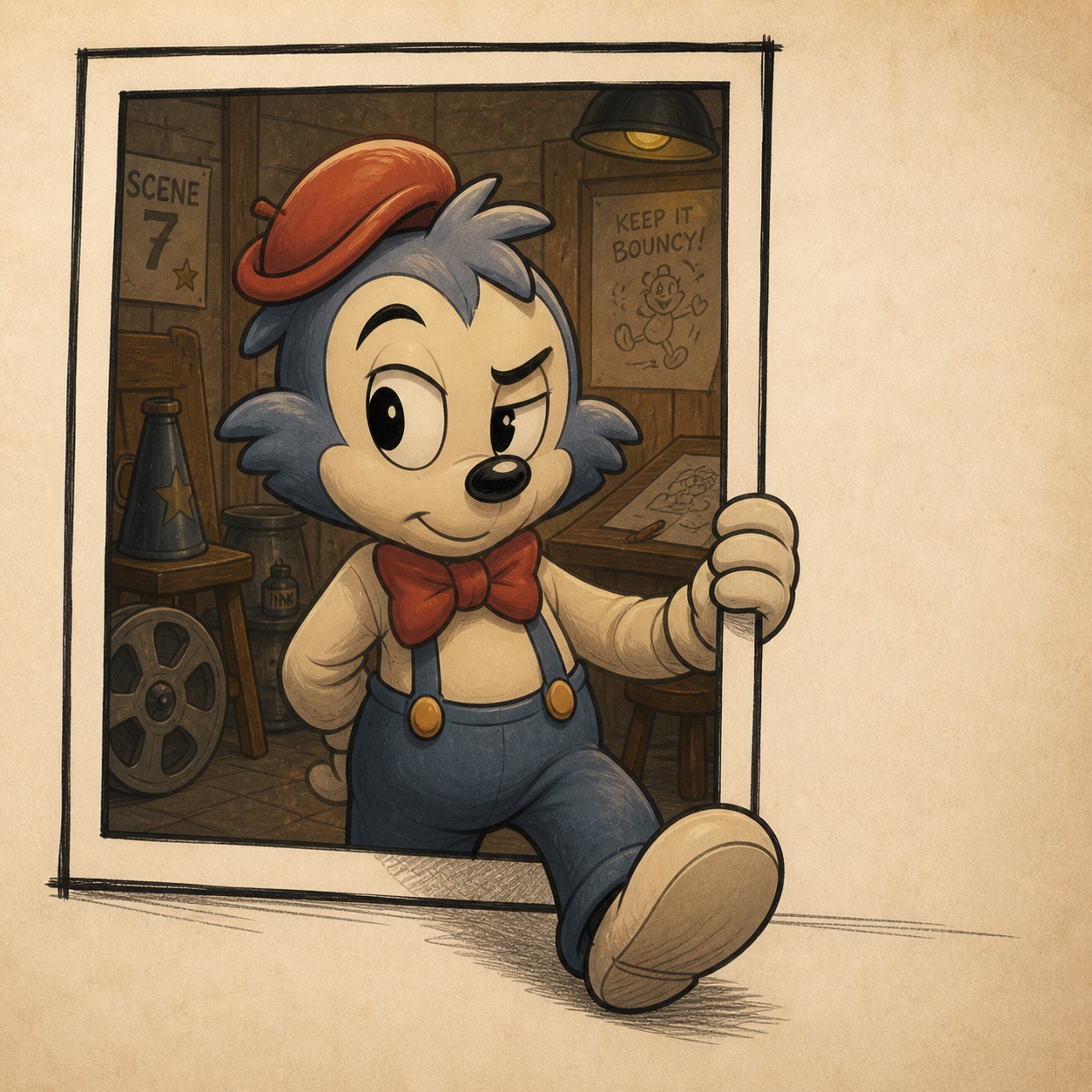 Fourth-Wall covers noticing the audience, addressing the camera, and, at high ratings, moving between the frame and the studio lot. All mechanical uses of the *Fourth Wall* subsystem (Chapter Eight) default to this skill for their checks:
- Addressing the Audience — Easy Fourth-Wall check to produce the beat cleanly.
- Walking Through — Hard Fourth-Wall check to emerge where you intended.
- Audience Reaction shifts — opposed Fourth-Wall check against the scene’s performance difficulty.
Characters without Fourth-Wall training default to the linked characteristic (Willpower) with no upgrades, per the Core untrained-check rules. Fourth-Wall is the only skill on the list gated by a subsystem; a table not using the Fourth Wall subsystem may safely remove it.
Performance
Performance measures the quality of any intentional performance, from a musical number to a dramatic monologue to a choreographed fight on set. In performance scenes (Chapter Eight, Audience Reaction), it replaces other skills as the driver of the check. No archetype leans on it harder than the Spotlight Thief.
Skill Notes for GMs
- When a check could reasonably use two skills (Charm and Deception for a sweet lie, Brawl and Melee when a fist holds a mallet), the GM picks based on the character’s intent, not the object. Let the player choose when it is close.
- Gag-Craft and Pratfall are load-bearing for the genre. Expect every character to have at least 1 in each, even if their build does not emphasize them.
In This Chapter
- The skill list, by category
- Skill descriptions and setting-specific rulings
- Cartoon Skills in depth
- GM notes on skill choice