PDF Download the Ink & Mayhem Universe Guide 24.0 MB
Character sheet Toon Contract
A coyote stands on a cliff edge. Below him, stretched to the horizon, is a canyon drawn in watercolor. Above him, a sign reads FREE BIRDSEED. He does not realize he has run past the cliff until he reads the sign, blinks, looks down, holds up a small placard that says uh-oh, and drops. The impact makes a puff of dust in the shape of a coyote.
Three minutes later he is fine. He has a new plan.
This is the universe of Ink & Mayhem. Welcome to work.
Every Punchline Hits
You are a working toon. You live in a town that orbits a studio lot, with rivals across the hall, a landlord you owe rent to, and a shtick that has carried you since the Golden Age. Half your life is filmed. The other half happens between takes.
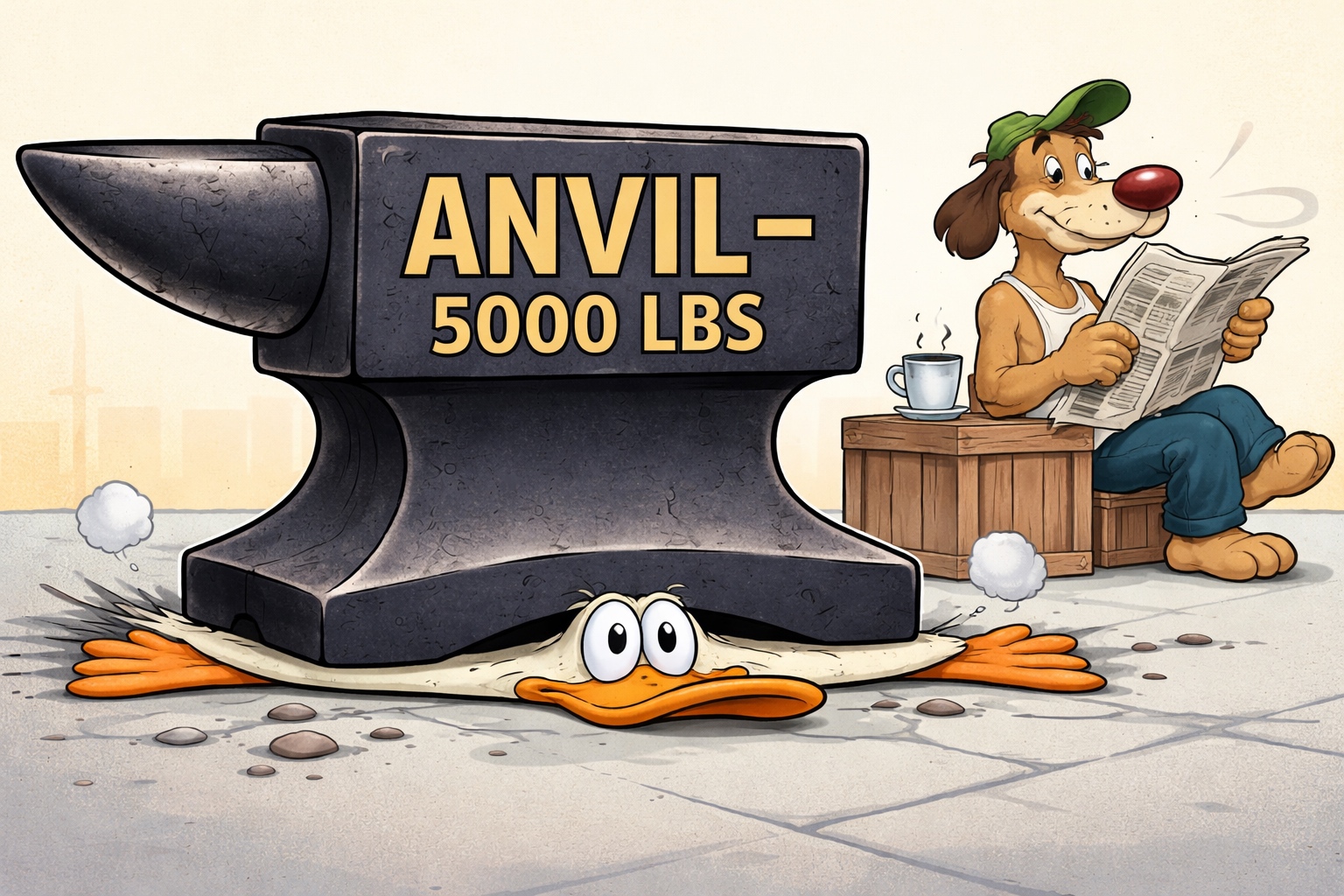
When the camera rolls, the laws of physics are suggestions. Anvils find your head with uncanny accuracy, and a disguise consisting of a single false mustache is, by the standards of the universe, foolproof. You cannot die. You can, however, be humiliated, upstaged, unpaid, unrenewed, and haunted by an ex-costar who now works across the street at Warped Bros.
This is a comedy game, played as comedy. The stakes are professional, romantic, reputational, and occasionally existential, but the mode of play is the short. A session of Ink & Mayhem is a single animated short unfolding at the table: a setup, a complication, an escalation, a peak of chaos, and a snap resolution. Then you go home and have dinner with the other toons who survived.
What You Play
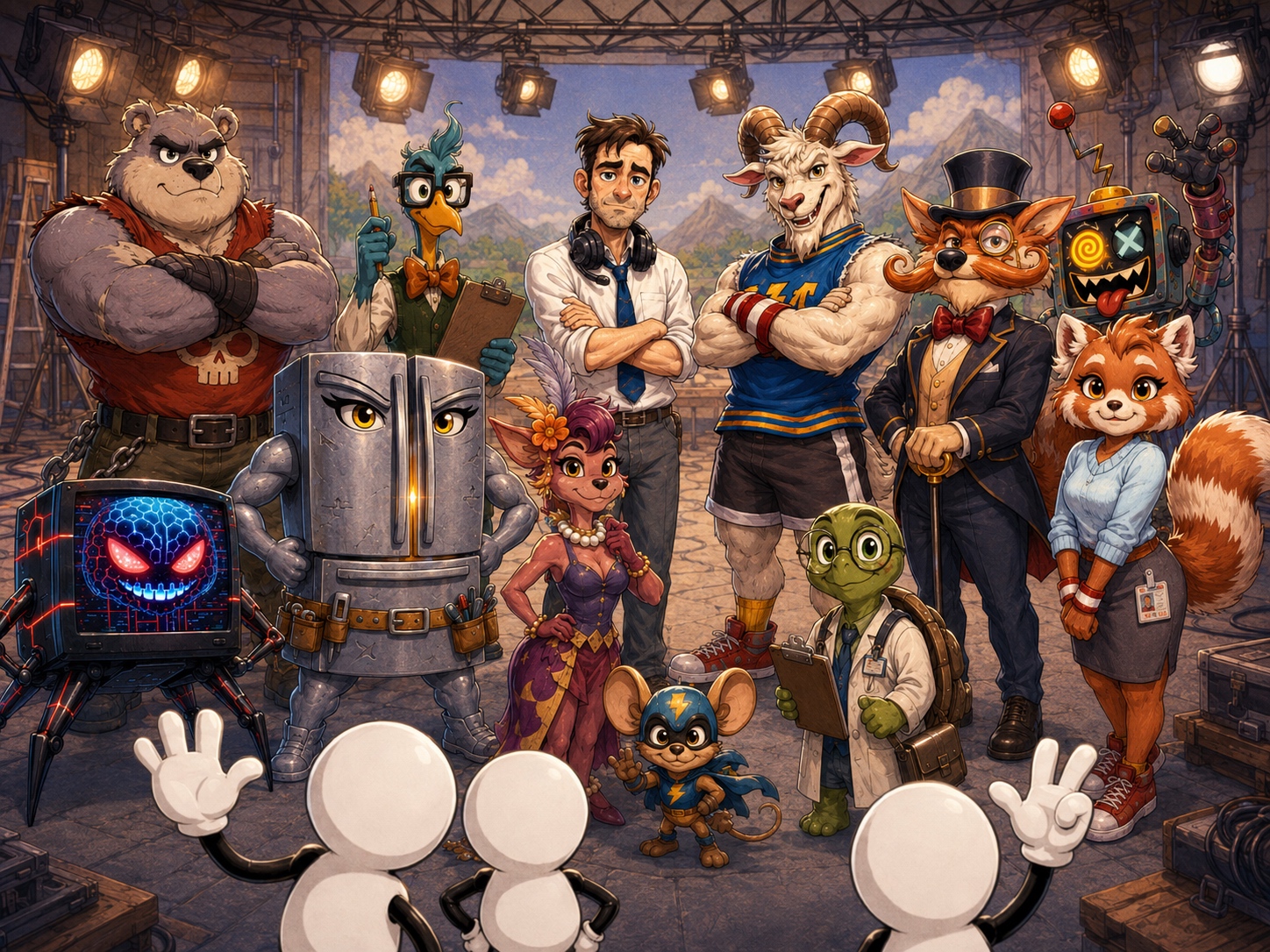
Characters in Ink & Mayhem are cartoon talent. They have any Look the reader chooses, rabbit, coyote, duck, cat, mouse, bear, sentient object, whatever the fiction calls for, playing characters with one-sentence identities: the self-sabotaging genius, or the unflappable straight man, or the lovable dope. That identity is your shtick, and how it can stay fixed while your career still grows is the subject of The Shtick Paradox, later in this chapter.
Your characters are not citizens of a cartoon world. They are employees of one. The studio system frames everything: it is the employer, the antagonist, the home, and the stage. This is a book about the craft of being funny for a living, in a universe where being funny is the only industry that matters.
Tone & Feel
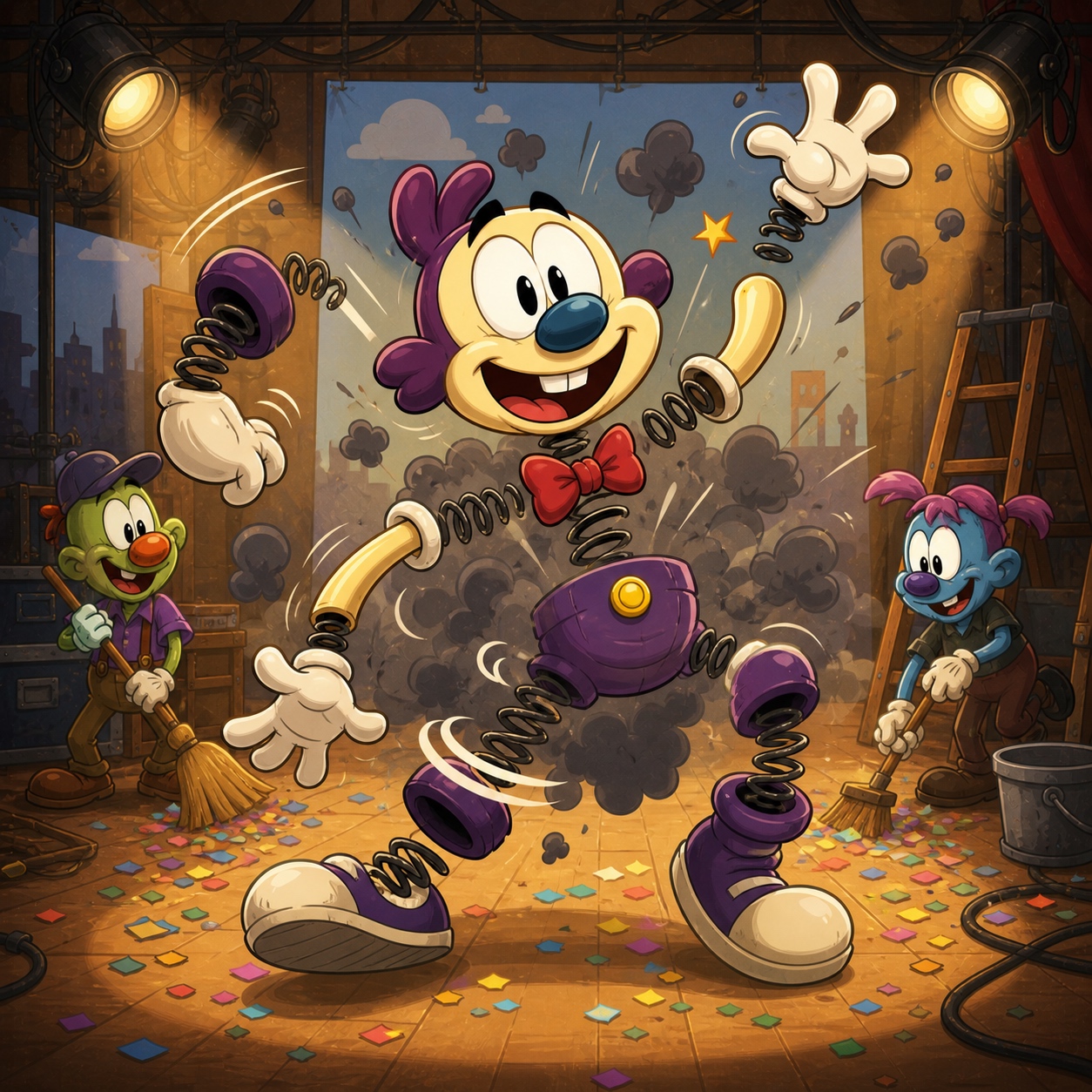
The tonal reference for Ink & Mayhem is the golden-age theatrical short, Warner Bros., MGM, UPA, Tex Avery, Chuck Jones, filtered through every generation that inherited that language. The game is loud, fast, visually inventive, and physically violent in a way that always resets.
The register here is affectionate, inventive, and physically unafraid. The humor comes from character and escalation; a perfectly timed pratfall is worth more at this table than any shock beat. The violence is frequent, the cruelty is absent, and the feud is the point of the show.
Touchstones
If the table wants a vocabulary of references to draw from, these are the touchstones this book was written against. Treat them as a shared language rather than a prescription.
The canonical shorts. Looney Tunes and Merrie Melodies (the Chuck Jones, Friz Freleng, and Bob Clampett eras above all). Tom and Jerry. Tex Avery’s MGM shorts. The Pink Panther. Woody Woodpecker. Popeye. Betty Boop.
The modern inheritors. Animaniacs and Tiny Toon Adventures. The ensemble shows that understand the golden-age grammar, Steven Universe at its warmest, Gravity Falls at its most anarchic, Bluey at its most inventive. The Cuphead videogame series for its fidelity to the aesthetic. The mixed-media works. Who Framed Roger Rabbit is the canonical cross-reference for “toons are people who work in cartoons.” Space Jam. The Last Action Hero. Anything that takes the premise of working performers seriously and runs with it.
The metafictional. Daffy Duck’s screen-aware monologues. Bugs addressing the camera. Every moment a toon has looked at the audience, raised an eyebrow, and said can you believe this guy? The game's Fourth Wall rules are built from those moments.
What This Book Is Not
Ink & Mayhem is not an adult-animation book. It is not South Park, not Family Guy, not Rick and Morty, not Happy Tree Friends. It does not run on shock, transgression, crude sexual humor, or the deconstruction of cartoon conventions for ironic effect. Groups that want those registers are welcome to use this system for them; nothing in the rules forbids it. But the default tone, the example fiction, the art direction, and the written voice of this book all lean toward the earnest, craft-driven, character-first cartoon of the golden and classic television ages.
Ink & Mayhem is also not a comedy-of-RPG-tropes book. It is a game about cartoon characters, not a parody of D&D. There are no jokes at the expense of the roleplaying hobby. The humor belongs to the fiction.
Finally, Ink & Mayhem is not a replacement for the core rules. This is a setting book. It assumes the Exodus NDS Core Rules are available at the table for characteristic advancement, skill checks, dice pool construction, structured play, and everything the core rules already cover. Chapter Eight modifies, renames, and extends those rules for the cartoon context; it does not re-explain them from scratch.
The Shtick Paradox
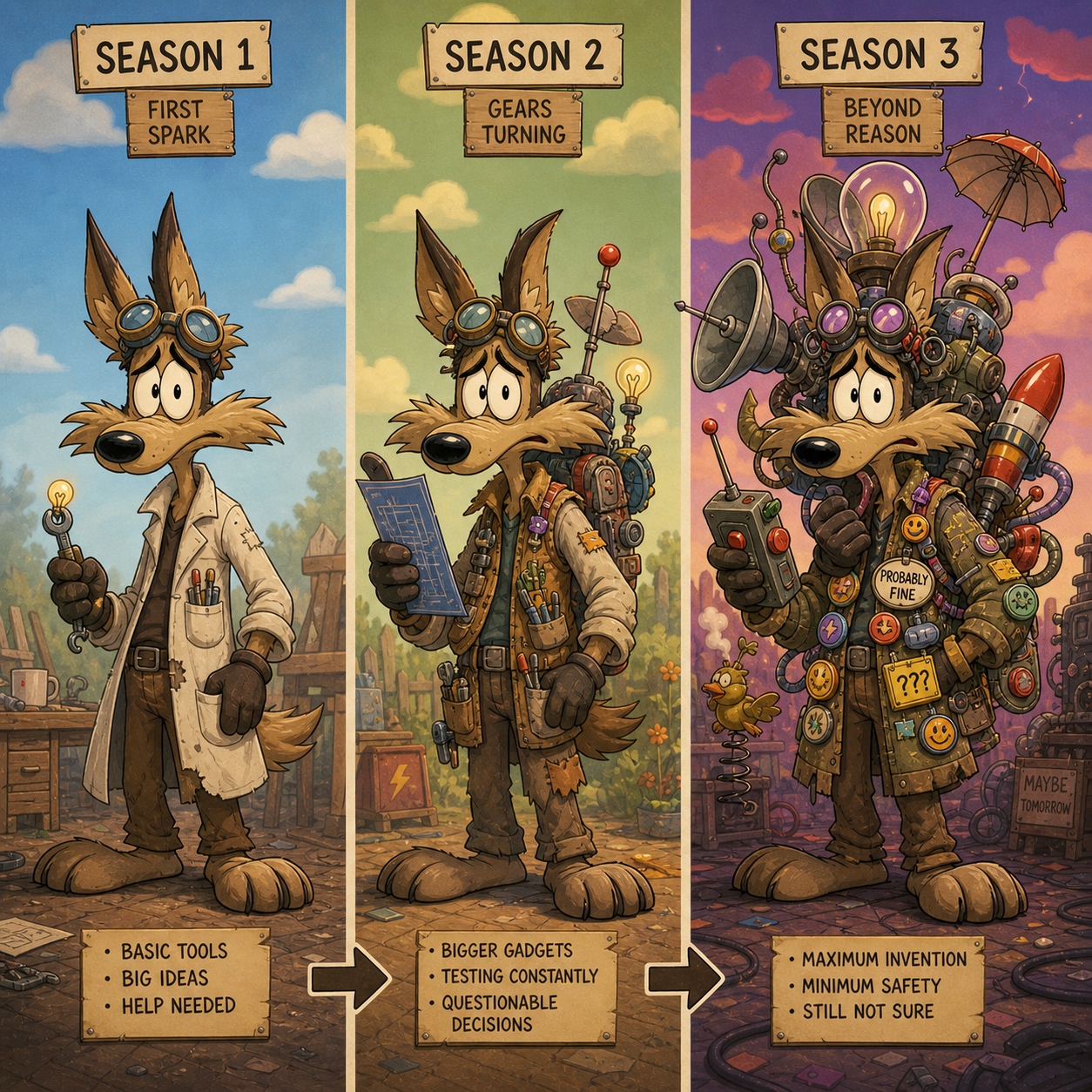
There is a problem at the heart of this book, and it is fair to acknowledge it up front: cartoons resist change, and roleplaying games demand progression. The Road Runner never gets caught. Wile E. Coyote never wises up. Bugs and Daffy have the same conversation for eighty years. This is a feature of the medium, the unchanging character in an infinity of situations is the engine that makes cartoon comedy work.
Roleplaying games, by default, lean the opposite direction. Characters level up. They learn. They grow. A campaign changes the person who starts it. How do you run an arc about a character who, by genre mandate, is not allowed to arc?
Ink & Mayhem answers the paradox by layering time. Your shtick, your core identity, is locked during active play, and the game mechanically rewards you for staying in it. A rare Shtick change belongs at Hiatus, between Seasons, and only after the table agrees the old Want has reached its natural ending. But your repertoire of bits grows with experience. Your relationships with fellow toons evolve scene by scene. Your Want, the eternal chase, advances in increments and may resolve only at Season-scale turning points, after which a new Want takes its place. A coyote in Season Three is still a coyote, but he has new bits, new grudges, and new rivals.
This is the central design choice of Ink & Mayhem, and the game's mechanical subsystems are built to serve it.
How to Use This Book
For players: Chapter One (this one) gives you the pitch. Chapter Two shows you the universe you live in. Chapter Three takes you through character creation, Looks, Shticks, the works. Chapters Four through Seven are your menu of skills, talents, equipment, and vehicles. Chapter Eight is the rules you will rely on most, read at least the sections on Shtick play, Gag Tokens, and the Fourth Wall before your first session.
For GMs: Chapters One through Three give you the shared premise the table will build on. Chapter Eight is the rules spine, read it end to end before running. Chapter Nine gives you adversaries. Chapter Ten gives you campaign and episode generation tools. Chapter Eleven is running advice, and is where you will spend the most time after Chapter Eight. Chapter Twelve holds references you will return to.
For everyone: the book was written to be read in order, but it was organized to be used out of order. Most chapters end with a short In This Chapter summary so you can confirm you are in the right place.
A Note on Tone at Your Table
The best Ink & Mayhem sessions borrow a principle from improv: yes, and. A coyote says I brought a catapult. The GM does not ask where he got it; it came from the Prop Department, and they will bill him for it next scene. A duck declares I paint a tunnel on this wall and run through it. The GM does not assess structural integrity. The tunnel works.
The game is built to reward inventiveness, escalation, and commitment to a bit rather than optimization, caution, or careful planning. If your table tends toward the latter, the GM’s job is to make cartoon logic the safer option than realism; Cartoon Physics, Gag Tokens, and Shtick bonuses are all aimed at making that true.
If a rule in this book ever conflicts with a funnier outcome, the funnier outcome wins; Chapter Two gives that principle its full statement.
In This Chapter
- The elevator pitch
- What you play
- Tone and feel
- Touchstones
- What this book is not
- The Shtick Paradox
- How to use this book