PDF Download the Ink & Mayhem Universe Guide 24.0 MB
The world of Ink & Mayhem is a place where cartoon physics is the actual physics. Gravity waits for realization. Anvils always land. Signs weigh what they say they weigh. A door drawn on a wall opens. This is not a stylistic choice. It is the law.
The World as It Stands
The Ink & Mayhem universe is dominated by one industry above all others: animated entertainment. The player characters are working toons, employed studio talent (see Chapter One), and the shorts, series, commercials, and features they film are the product the audience consumes.
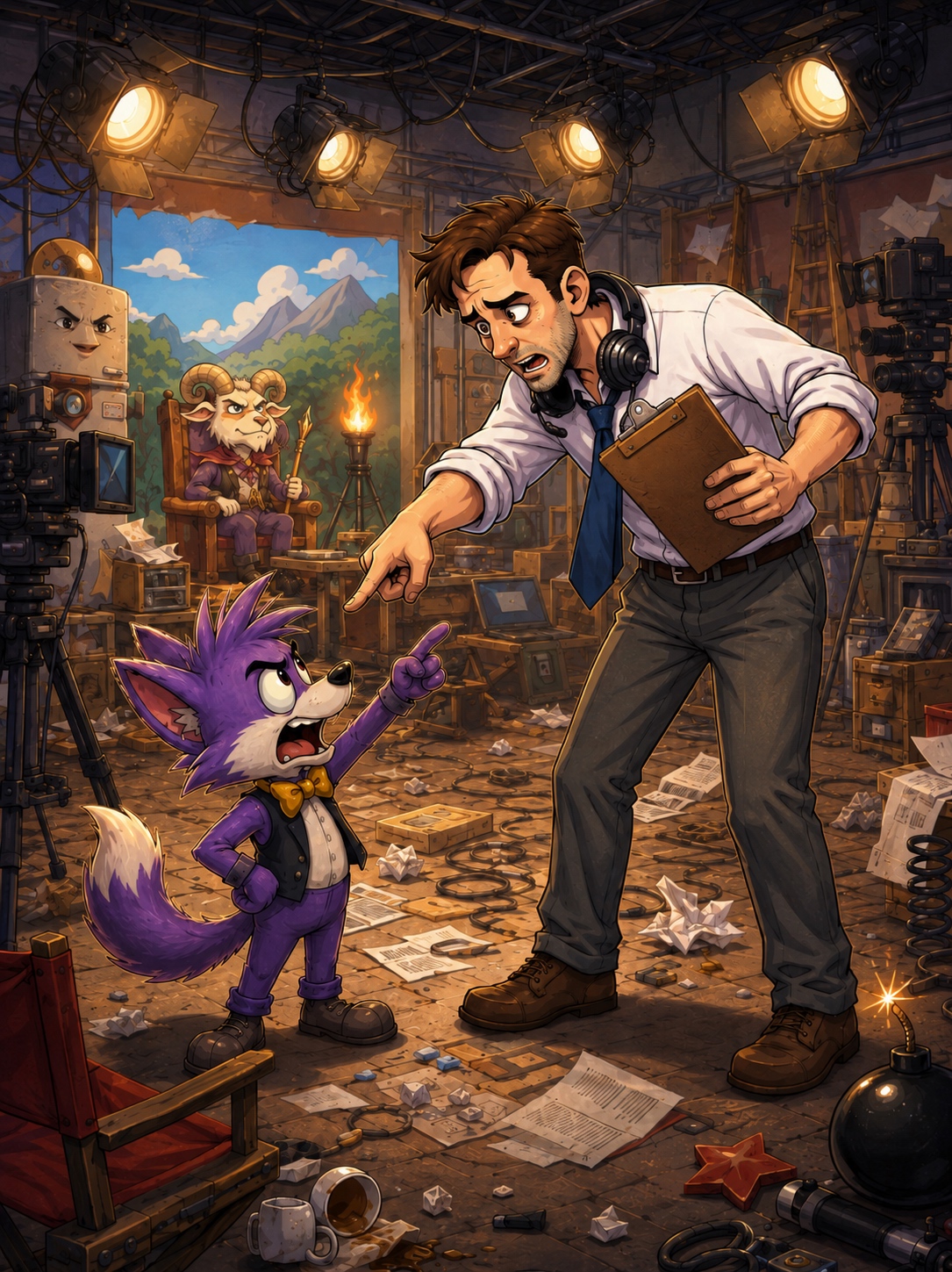
Daily life has two modes. On-set, a toon is filming: a chase, a pratfall, a trap, a gag, with cartoon physics fully unbounded (Conceit 1, below). Off-set, a toon lives in the town that has grown up around the studio lots, with an apartment, a rival in the next building over, a contract coming up for renewal, money owed to the Prop Department, a crush on the voice actor across the hall, and notes from executives who do not understand comedy. A campaign may spend its time in either half, or more often in both.
The center of gravity for the default campaign is ENDS Studio, the premier animation house of its era, and the home studio of the player characters.
History in Broad Strokes
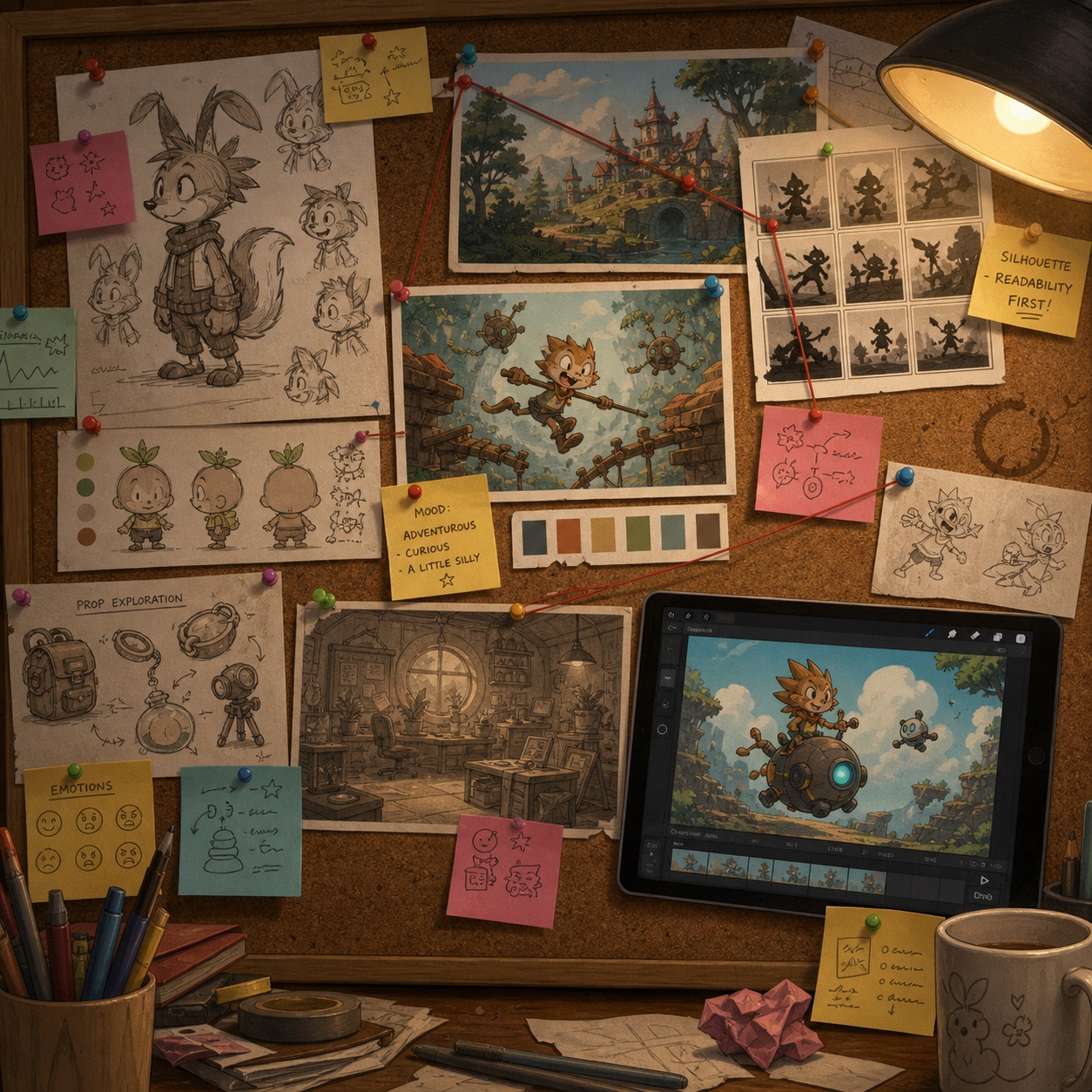
The First Line. In the setting’s own origin story, the Pen drew the first toon, who was already laughing at the second toon drawn beside it. Toons treat the art form as older than recorded history, predating stone carvings and the discovery of fire, and most of them will tell you the fire was lit so the drawings would have something to flicker against.
The Golden Age. The studio system formed as cartoons went from novelty to industry. The great theatrical shorts were born here, the first chases, the first traps, the first anvils, the first time a character looked directly at the audience and raised an eyebrow. Many toons working today started in this era and have not aged a day since.
The Television Age. When the Network emerged, cartoons migrated off the theatrical screen and into the home. Volume exploded; budgets contracted. New studios opened. Old masters retired.
The Studio Wars. A period of ruinous competition between the major studios, fought through talent poaching, rival productions, budget sabotage, and at least one literal explosion. Most of the modern studio landscape was carved out in this era.
The Present. ENDS Studio stands at the top of a crowded field, with rival studios circling, the Network demanding ratings, and the Standards Board flagging every third gag. The audience wants something new and also exactly what it already knows. Critics periodically declare comedy dead, as critics have in every era, and they have been wrong each time.
Major Factions & Powers
ENDS Studio
The player characters’ home studio and the anchor of the default campaign; the ENDS dossier below covers it in full.
The Rival Studios
A constellation of competing houses, chiefly Warped Bros. Pictures, Mice House Entertainment, and the Independent Collective, each with its own dossier below. Any of them will hire your character for the right price, and any of them will sue your character for the wrong one.
The Audience
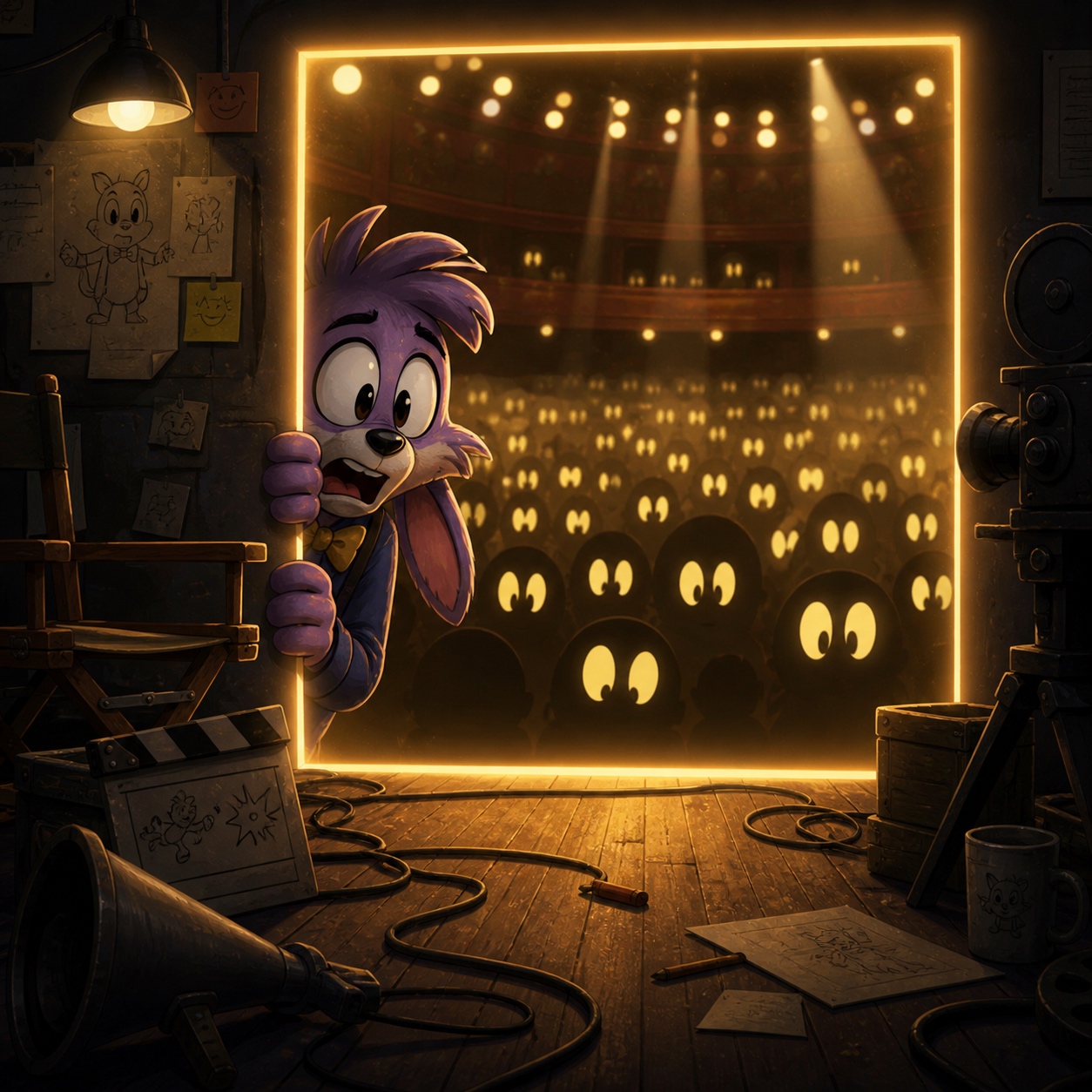
The fourth power of the Ink & Mayhem universe, and the only one that is, strictly, real. It rewards commitment and punishes pandering; see the Audience dossier below, and Chapter Eight: Universe Rules, The Fourth Wall, for tracking its favor.
The Standards Board
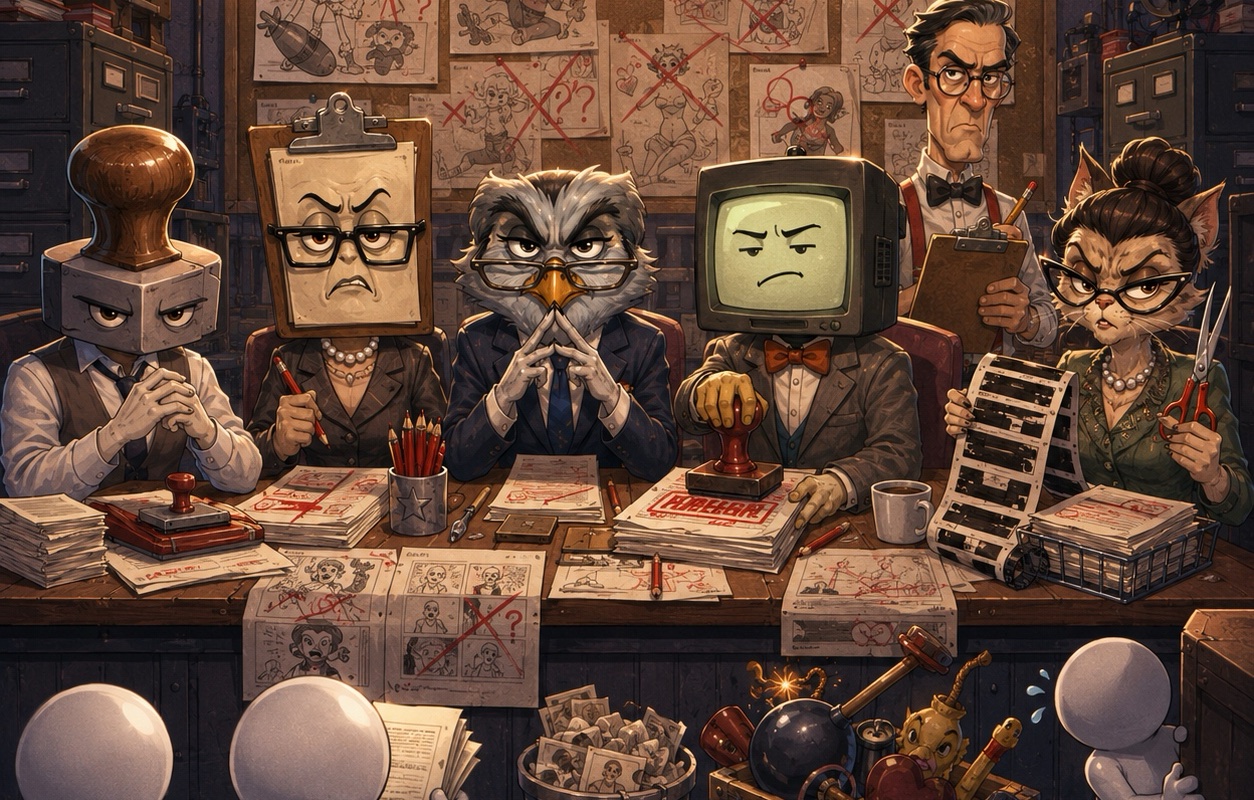
The censors: a committee of joyless reviewers who flag, cut, and neuter any gag deemed too violent, too suggestive, or too confusing for the audience. Their dossier is below.
The Network
The amorphous, all-powerful broadcaster that ultimately decides what airs; the Network dossier below covers how to use it.
The ENDS Prop Department
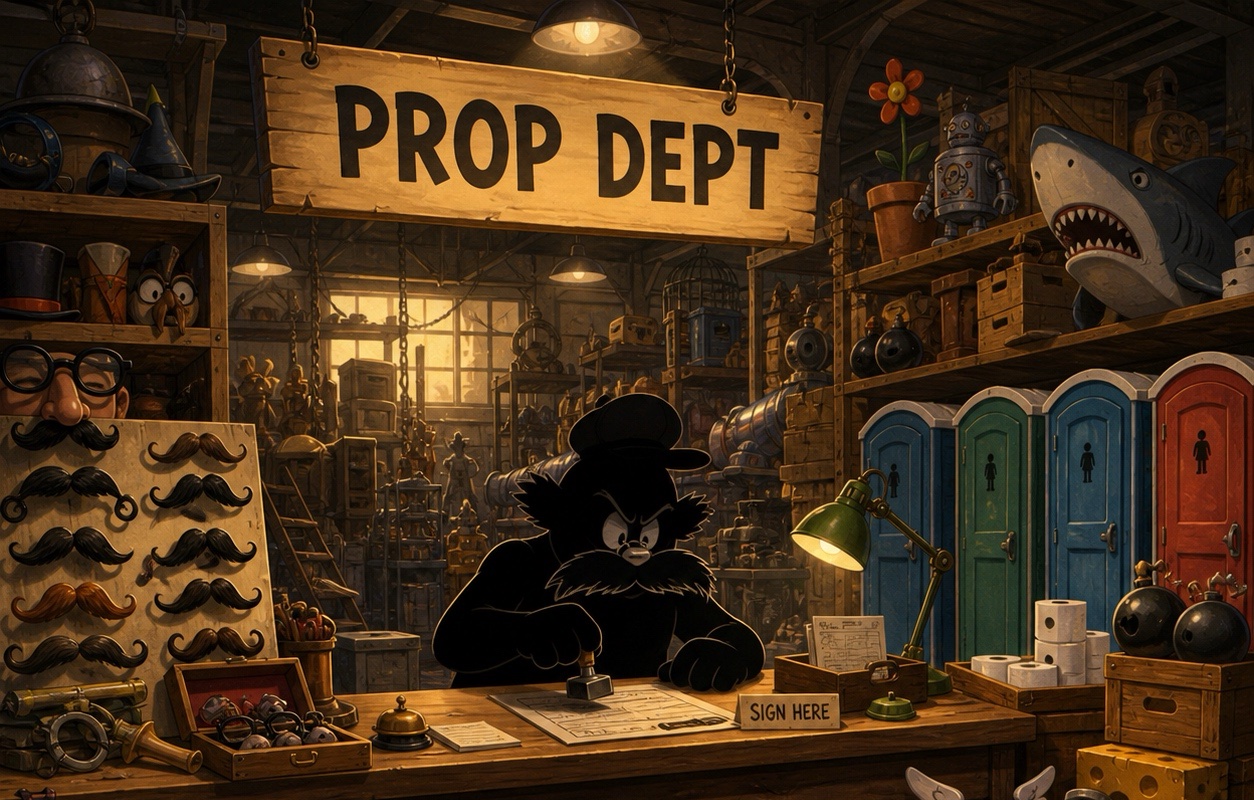
The in-house supplier of every weapon, gadget, trap, explosive, anvil, disguise, and portable hole that appears on-screen. Its dossier is below; see Chapter Six: Equipment & Gear for the catalog.
Entity Dossiers
Each dossier below expands one entry from the roster above into a campaign tool: a source of jobs, pressure, allies, rivals, paperwork, and consequences that survive beyond the end of a single short.
Dossier: ENDS Studio
What It Is: The player characters’ home studio, professional family, landlord-by-implication, and default excuse for why the ensemble is in the same room every week. ENDS produces theatrical shorts, television series, commercials, feature films, and streaming content from a lot that sprawls across a dozen soundstages, a prop warehouse, a commissary, an executive tower, and several buildings whose purpose no one remembers. Its logo, a stylized inkwell with a quill rising from it, appears on every product; its rivals hate it, and its employees love it and complain about it in equal measure.
| Category | Details |
|---|---|
| Wants | Keep its place at the top of the industry; make shorts that still feel alive; keep valuable talent under contract; avoid being embarrassed by rivals, censors, or the Network. |
| Controls | Soundstages, writers, vehicles, paychecks, billing, publicity, contracts, access to the Prop Department, and the call sheet. |
| Pressure on PCs | Assigns jobs, rewrites episodes, changes call times, bills damage, withholds access, promotes rivals, or makes a PC carry a short they are not ready to carry. |
| How PCs Deal With It | Charm executives, impress the Audience, make the short work despite the notes, use Bonds with staff, exploit old lot traditions, or threaten to walk across the street. |
| Key Faces | The Executive, Old Murgatroyd, Hallie Zane in the Writers’ Trailer, Paulie “Two Takes” Dubinski, and any veteran toon who remembers when the studio was smaller. |
| Mechanical Touchpoints | Billing, Audience Favor, Tab, Episode Structure, Season Structure, starting gear, studio locations, and contract consequences. |
Typical Scenes: emergency production meetings, contract renegotiations, dressing-room arguments, last-minute rewrites, a studio gala, the old guard telling the new talent how the bit used to work.
Episode Hooks:
- ENDS assigns the PCs to revive a beloved old short, but nobody agrees which part was beloved.
- A memo says one PC is being “repositioned for broader appeal.”
- The studio throws a celebration for a rival’s public failure, and the rival shows up.
- A forgotten soundstage opens for the first time in decades, already dressed for a short no one remembers making.
Dossier: The Network
What It Is: The off-set power that outranks every studio. The Network is rarely seen as a single person; it is invoked as a force, referenced in rumors, and sometimes embodied by a nervous executive in an ill-fitting suit. It is not so much evil as perpetually concerned.
| Category | Details |
|---|---|
| Wants | Ratings, sponsor safety, predictable delivery, audience growth, and no calls from legal before lunch. |
| Controls | Renewal, cancellation, timeslots, sponsor notes, executive mandates, promotional campaigns, and the official explanation for failure. |
| Pressure on PCs | Demands a sponsor-friendly beat, assigns a focus test, opens a Cancellation Arc, changes the target audience, or sends the Executive to watch the set. |
| How PCs Deal With It | Deliver Audience Favor, make a note funny enough to survive, redirect blame, win over the Executive, or turn a mandate into the premise of the episode. |
| Key Faces | The Executive, unnamed vice presidents, clipboard assistants, sponsor representatives, and the voice on the phone that never identifies itself. |
| Mechanical Touchpoints | Audience Slump, Billing pressure, Contract Renegotiation, Audience Reaction, Season finale renewal, and “The Network Is Concerned” adversary ability. |
Typical Scenes: a notes meeting, a sponsor visit, a live screening, a renewal panic, a focus-group report that completely misunderstands the short.
Episode Hooks:
- The Network demands that a violent chase teach a wholesome lesson.
- The PCs are told one recurring gag now tests poorly with “urban regional breakfast households.”
- A Network observer sits in the front row and laughs at exactly the wrong moments.
- A cancellation memo arrives early, before the episode that supposedly caused it has been filmed.
Dossier: Warped Bros. Pictures
What It Is: ENDS Studio’s loudest rival: aggressive, shameless, fast, combative, and always willing to steal a bit if the serial numbers can be filed off before Friday.
| Category | Details |
|---|---|
| Wants | Steal heat from ENDS, poach talent, win the weekly audience, prove their chaos is funnier, and keep old grudges alive because grudges sell tickets. |
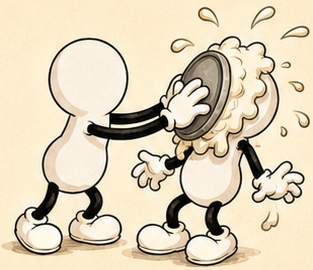
| Controls | Rival soundstages, saboteurs, publicity leaks, pie squads, stolen props, black-market gag writers, and several very good lawyers they pretend not to use. |
| Pressure on PCs | Sabotage, impersonation, talent poaching, public challenges, hostile cameos, stolen scripts, rival premieres, and planted props. |
| How PCs Deal With It | Beat them on-camera, expose the theft, steal the bit back, negotiate with their stars, or accept that the rivalry itself is the episode engine. |
| Key Faces | Bitsy Malone, the Cataclysm Kid, the Pie Squad, Warped Bros. scouts, and bitter ex-ENDS talent with better dressing rooms. |
| Mechanical Touchpoints | Rival Toon, Pie Squad Minions, Pie Squad Captain, Bounty Toon, Nemesis scenes, Rival Contract season pressure, and Audience Reaction contests. |
Typical Scenes: cross-lot chases, stolen gag arguments, public premiere duels, sabotage disguised as delivery, a former co-star showing up with a better contract.
Episode Hooks:
- Warped Bros. releases a trailer for the exact short the PCs are still filming.
- Bitsy Malone invites one PC to guest star and refuses to say whether ENDS approved it.
- The Pie Squad delivers pies to the wrong studio on purpose.
- A Warped Bros. scout offers a contract that solves one PC’s Want too neatly.
Dossier: Mice House Entertainment
What It Is: The polished corporate rival: family-friendly, brand-protective, legally terrifying, and sincere enough about its image to become dangerous.
| Category | Details |
|---|---|
| Wants | Total brand control, clean public image, merchandising dominance, talent who can behave in parades, and the quiet absorption of anything marketable. |
| Controls | Security teams, lawyers, family parks, mascot rules, corporate archives, licensing departments, and an army of cheerful interns with nondisclosure agreements. |
| Pressure on PCs | Lawsuits, cease-and-desist orders, security removal, image-polishing offers, family-friendly rewrites, and accusations that ENDS is irresponsible. |
| How PCs Deal With It | Outwit the lawyers, embarrass the brand without crossing a line, exploit corporate politeness, find the one employee with a sense of humor, or force a public gag they cannot suppress. |
| Key Faces | Mice House Security, Studio Lawyer Teams, brand managers, mascot handlers, and cheerful executives who never raise their voices. |
| Mechanical Touchpoints | Mice House Security Minions, Studio Lawyer Team Minions, legal-paper consequences, forged Studio IDs, Standards pressure, and Tab-adjacent contract trouble. |
Typical Scenes: escorted off-lot, brand review, a parade rehearsal, deposition comedy, a perfectly clean office where one spilled ink drop becomes a crisis.
Episode Hooks:
- Mice House claims ownership of a gag because one of their mascots once slipped similarly.
- A PC is hired to appear at a family event with a contract rider longer than the script.
- Security catches the PCs sneaking in, but the crowd thinks it is part of the show.
- A smiling lawyer offers to buy a PC’s Shtick.
Dossier: The Independent Collective
What It Is: The loose cloud of boutique studios, one-toon shops, art houses, basement animation outfits, experimental shorts, and stubborn freelancers operating outside the major studio machine.
| Category | Details |
|---|---|
| Wants | Artistic control, survival, a hit big enough to pay rent, freedom from studio notes, and respect from toons who think budget equals quality. |
| Controls | Tiny stages, strange techniques, underground festivals, freelance crews, rumor networks, unpaid favors, and risky new forms of cartoon physics. |
| Pressure on PCs | Tempting creative freedom, unstable productions, favors owed, public accusations of selling out, and risky collaborations that ENDS cannot officially approve. |
| How PCs Deal With It | Help finish a short, lend props off-book, appear under a fake name, protect a fragile artist, or decide whether success has made them part of the problem. |
| Key Faces | One-toon directors, broke geniuses, former child stars, experimental animators, night-shift inkers, and old friends who never signed with a major studio. |
| Mechanical Touchpoints | Streetwise, Lore, Prop Department favors, Want hooks, Bond scenes, guest-star tables, and Season pressures about legacy or artistic compromise. |
Typical Scenes: a midnight screening, a collapsing micro-studio, a handmade short that should not be physically possible, a favor that puts ENDS property in an independent film.
Episode Hooks:
- An independent short is beating ENDS with one pencil, one lamp, and one perfect gag.
- A friend asks the PCs to “borrow” a Rarity 7 prop for a no-budget masterpiece.
- A festival jury includes someone the PCs flattened in Episode 1.
- A toon who left the studio system wants back in, but only if they can keep their dignity.
Dossier: The Standards Board
What It Is: The censor’s office, script-review authority, public-decency machine, and professional enemy of every gag that becomes too alive. Every toon has a nemesis on the Board, every script lives or dies by its stamp, and the institution is universally loathed and begrudgingly necessary.
| Category | Details |
|---|---|
| Wants | Keep cartoons acceptable, prevent sponsor panic, make comedy legible, preserve the Code of Practice, and prove that laughter can be made safe. |
| Controls | Red stamps, review notes, gag flags, compliance meetings, delayed releases, required edits, and the power to make a funny scene explain itself until it dies. |
| Pressure on PCs | Flags gags, cancels Breakthrough payoffs, audits Fourth-Wall moments, creates Standards Watch, or sends Crust to supervise. |
| How PCs Deal With It | Argue intent, perform clean versions of dirty-looking gags, hide the dangerous part inside timing, win over a junior clerk, or make Crust accidentally laugh. |
| Key Faces | J. Lemington Crust, Censor Inspectors, Standards Board Clerks, Miss Abernathy, and assistant censors hoping to be feared someday. |
| Mechanical Touchpoints | Standards Board Clerks, Censor Inspector, J. Lemington Crust, Standards Watch, Flagged by the Standards Board, and Difficulty under scrutiny. |
Typical Scenes: review room hearings, on-set interruptions, red-stamp duels, arguments over whether a pie is “suggestive,” a censor trying not to laugh.
Episode Hooks:
- The Board flags a word, image, or gesture the PCs use every episode.
- Crust demands a clean remake of the dirtiest-looking harmless gag in ENDS history.
- A junior censor laughs at a short and begs the PCs not to tell anyone.
- The Board approves a gag everyone else knows is dangerous.
Institution Dossier: The ENDS Prop Department
What It Is: ENDS Studio’s impossible warehouse, armory, costume shop, trap supplier, vehicle depot, debt engine, and institutional memory, run by a cantankerous quartermaster and staffed by technicians who have built every iconic gag in the studio’s history. Toons requisition props here, sign for them in triplicate, and are billed when they fail to return them (which is always).
| Category | Details |
|---|---|
| Wants | Props returned, tabs acknowledged, dangerous items signed out properly, legacy equipment respected, and everyone to stop asking whether the back tunnel has an end. |
| Controls | Gear, weapons, vehicles, costumes, portable holes, anvils, signature items, repair records, restricted stock, and the Tab. |
| Pressure on PCs | Denies Rarity 4+ requests, sends bills, assigns make-good errands, releases the wrong prop, demands recovery of lost items, or reveals embarrassing charges. |
| How PCs Deal With It | Pay down debt, do favors for Murgatroyd, recover lost gear, flatter the technicians, forge paperwork, or accept the cursed item because the scene needs it. |
| Key Faces | Old Murgatroyd, apprentices fighting over succession, the Prop Department Rogue, the Voice in the Back, and every technician who knows exactly what broke. |
| Mechanical Touchpoints | Chapter Six catalog, Prop Credits, Rarity, Tab Crisis, Hammerspace vs. Inventory, starting gear packages, signature items, and vehicle requisitions. |
Typical Scenes: requisition arguments, debt audits, cursed item returns, inventory chases, old prop reveals, a quiet technician explaining why the anvil is angry.
Episode Hooks:
- A PC’s tab contains a charge from a scene they do not remember filming.
- Murgatroyd refuses to release a needed prop until a lost mallet is recovered.
- A signature item appears in a starting gear package by mistake.
- The Prop Department Rogue auctions off something that still has a PC’s name on it.
Power Dossier: The Audience
What It Is: The watching power beyond the Fourth Wall, a force rather than an organized faction. It rewards commitment, punishes pandering, remembers what the studio hopes it forgot, and can be addressed by toons who know how to look back. A performance that lands charges the performer; a bomb that lands in front of a full house can destroy a career.
| Category | Details |
|---|---|
| Wants | Surprise without betrayal, commitment without desperation, familiar Shticks under new pressure, and endings that feel like buttons. |
| Controls | Attention, laughter, silence, Audience Reaction, Audience Favor, Billing movement, renewal pressure, and the feeling that a gag has landed. |
| Pressure on PCs | Boos, silence, bad reaction, Favor drought, Slumps, pressure to repeat an old bit, or sudden love for the wrong character. |
| How PCs Deal With It | Commit to Shtick, land a visible risk, honor Bonds, address the Fourth Wall cleanly, take the funnier failure, or refuse to pander. |
| Key Faces | Usually none. Sometimes silhouettes beyond the lights, a laugh track that reacts too personally, a focus group, or a single child in the front row who understands the bit. |
| Mechanical Touchpoints | Audience Reaction, Audience Favor, Billing, Audience Slump, Fourth-Wall checks, Performance, Audience Eyes, Aside to the Audience, and Perfect Cartoon Moments. |
Typical Scenes: live screening, rooftop Fourth-Wall moment, focus test, performance scene, a sudden silence after a gag, a crowd laughing at something the PCs did not intend.
Episode Hooks:
- The Audience starts applauding before the gag happens.
- A long-running bit gets silence for the first time.
- One PC becomes inexplicably beloved after a failure.
- The Audience can hear the Roof too clearly, and something answers back.
Using Dossiers at the Table
When a session stalls, pick one dossier and ask what that entity wants from the current scene. ENDS wants the short finished. The Network wants it safer. Warped Bros. wants credit. Mice House wants ownership. The Standards Board wants control. The Prop Department wants payment. The Audience wants the bit to land.
Core Conceits
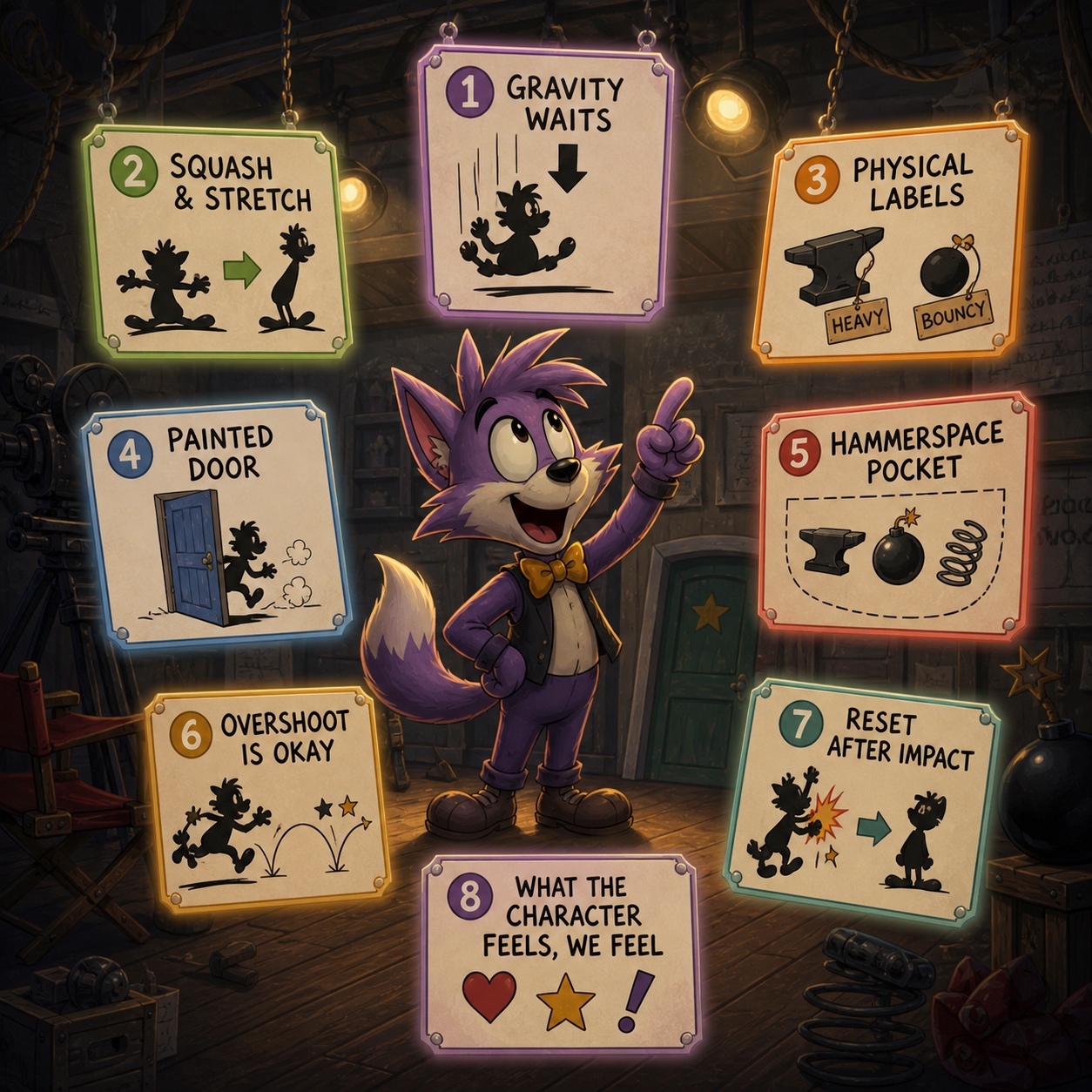
These are the eight non-negotiable truths of the Ink & Mayhem universe. Players and GMs are allowed to assume every one of them at the table without checking a rule. If any of them ever conflict with table reality, the conceit wins. They are numbered for citation: when a rule, ruling, or hard “no” elsewhere in this book invokes a conceit, it refers to one of the eight below.
-
Cartoon physics is the actual physics. Gravity waits for realization. Signs weigh what they say they weigh. A drawn door opens. A disguise works. Hammerspace is valid. This is the physical law of the setting.
-
Toons cannot truly die. Violence is frequent, vivid, and played for laughs. Characters are flattened, exploded, compressed, vaporized, folded into origami, and dropped from improbable heights. They return. Death exists only as a punchline, never as a permanent outcome. Mechanically, this is Elasticity and the Wiped Out condition (Chapter Eight).
-
The rule of funny overrides the rule of realistic. When two outcomes are both mechanically valid, the funnier one is correct. This is a ruling standard for the GM, not a loophole for the players; it cuts both ways.
-
Shtick is identity, and shtick is eternal. Every character has a core cartoon identity that cannot change. Character growth lives in the character’s toolkit, their relationships, and the rivals they pursue, never in their fundamental nature. The self-sabotaging genius does not become wise. The unflappable straight man does not become unhinged.
-
The Wanted Thing is never caught. Every character, and every ensemble, has a driving Want that fuels the campaign. They will get close. They will not get it. Pursuit is the engine; a campaign that resolves its central Want is over.
-
The fourth wall is a door. Certain characters can see the audience, address the camera, walk through the screen, and occasionally interact with the narration itself. This is a mechanical resource available through specific talents and shticks. The fourth wall is thin, and deliberately so.
-
Every short ends, and the world resets. Session-scale events reset by default. The building that was destroyed is whole again. The enemy who was wiped out returns. Characters remember nothing from yesterday’s chase unless the group explicitly commits to serialization.
-
The Studio is home. Between shorts, toons have lives. They have apartments, rivals, bosses, crushes, and unresolved professional grudges. The on-set world resets; the off-set world accumulates. Long-arc serialization lives here (see Chapter Eight: Universe Rules, The Session / Season / Studio Loop).
Why the Conceits Matter
If a proposed rule would violate a conceit, the conceit wins and the rule is wrong. If a player proposes a course of action that assumes a conceit, the GM says yes by default.
In This Chapter
- On-set and off-set modes of play
- History in broad strokes
- Faction roster and entity dossiers
- The eight core conceits